Baby Milestones 7-12 Months: On the Move!
Dr. Rebecca Thompson
Pediatrician & Child Development Specialist
Baby Milestones: 7-12 Months - On the Move!
Get ready for the most action-packed developmental period yet! From 7-12 months, your baby will likely master sitting, crawling, pulling to stand, and possibly even taking first steps. Let's break down this incredible stage month by month.
Month 7: Sitting Pretty
Physical Development
Motor Milestones
- Sits independently with confidence
- Pivots while sitting to reach toys
- May begin to crawl (or scoot, roll, army crawl)
- Supports full weight on legs when held
- Rocks back and forth on hands and knees (pre-crawling)
- Transfers objects between hands easily
Fine Motor Skills
- Pincer grasp emerging: Uses thumb and finger to pick up small objects
- Pokes with index finger
- Bangs two objects together
- Holds own bottle or sippy cup
Cognitive Development
Learning & Problem-Solving
- Object permanence strengthens: Looks for hidden toys
- Understands cause and effect: Pushes button to hear music
- Explores objects thoroughly: Turns, shakes, bangs, mouths
- Recognizes familiar people from a distance
- Anticipates routine events
Social-Emotional Development
Attachment & Preferences
- Strong attachment to primary caregivers
- Stranger anxiety peaks (may cry with unfamiliar people)
- Separation anxiety begins (cries when you leave room)
- Shows preferences for certain toys, people, activities
- Enjoys games like peekaboo and pat-a-cake
Communication
Language Development
- Babbles with inflection: Sounds like real conversation
- Says consonant chains: "Baba," "dada," "mama" (not meaningful yet)
- Responds to name consistently
- Understands "no" (tone and sometimes meaning)
- Makes sounds to get attention
Sleep
- Night: 10-12 hours (possibly sleeping through)
- Naps: Usually 2 naps (2-3 hours total)
- Total: 12-14 hours per day
Feeding
Solids Expand
- 3 meals per day (2-4 tablespoons per food)
- Milk: 24-32 oz formula or 4-6 breastfeeds
- Try finger foods: Soft, small pieces baby can self-feed
- Introduce sippy cup for water
Good finger foods:
- O-shaped cereal
- Small pieces of banana
- Soft-cooked vegetables
- Scrambled eggs
- Toast strips
- Avocado chunks
What You Can Do
Encourage Development:
- Create crawling space: Large, safe floor area
- Place toys out of reach to encourage movement
- Practice pulling to stand: Use sturdy furniture
- Offer finger foods to practice pincer grasp
- Read interactive books: Lift-the-flap, textured
Safety First:
- Baby-proof everything: Outlet covers, cabinet locks, furniture anchors
- Remove choking hazards: Small toys, coins, buttons
- Supervise constantly now that baby is mobile
Months 8-9: The Explorer
Physical Development
Mobility Explosion
- Crawls (traditional, commando, or bottom-scoot)
- Pulls to standing using furniture
- "Cruises" along furniture while standing
- Sits from standing position
- Claps hands
- Waves bye-bye
Fine Motor Skills
- Pincer grasp refines: Picks up cheerios with ease
- Points with index finger
- Turns pages in board books (several at a time)
- Puts objects in containers and dumps them out
Cognitive Development
Understanding Grows
- Follows simple commands: "Come here," "Give me"
- Looks for dropped toys
- Imitates actions: Clapping, waving, tongue clicks
- Understands object function: Knows cup is for drinking
- Shows memory: Remembers where toys are kept
Social-Emotional Development
Personality Blooms
- Tests boundaries (watches your reaction when doing "no-no")
- Shows pride in accomplishments
- May show fear of new situations
- Enjoys peek-a-boo and hiding games
- Shows affection with hugs and kisses
Communication
Language Comprehension
- Understands many words (even if can't say them)
- Responds to simple questions: "Where's ball?"
- Babbling sounds more like real speech
- May say first word (often "mama" or "dada"—and means it!)
- Uses gestures: Reaches up to be held, points at desired objects
Sleep
- Night: 10-12 hours
- Naps: Transitioning from 3 to 2 naps
- Sleep challenges: Separation anxiety can disrupt sleep
Feeding
Expanding Diet
- 3 meals + 2 snacks
- Milk: 24 oz formula or 3-4 breastfeeds
- Self-feeding increases
- Tries variety of textures: Soft chunks, ground meat, pasta
New foods to try:
- Yogurt (whole milk)
- Cheese (shredded or cubed)
- Ground meat
- Soft pasta
- Cooked beans
- Berries (cut in half)
What You Can Do
Encourage Development:
- Provide stable furniture for pulling to stand
- Create obstacle courses: Pillows, tunnels, soft blocks
- Teach words: Name everything, point to objects
- Play simple games: "Where's your nose?" "Give me five!"
- Sing songs with hand motions
Language Building:
- Narrate everything you do
- Read daily: 15-20 minutes
- Respond to babbling as if having conversation
- Teach baby sign language (optional but helpful): More, all done, milk
Months 10-11: Almost Walking
Physical Development
Pre-Walking Skills
- Cruises confidently along furniture
- Stands independently for a few seconds
- May take first steps while holding hands
- Sits down from standing with control
- Climbs stairs (with supervision)
- Squats to pick up toys
Fine Motor Mastery
- Pincer grasp perfected
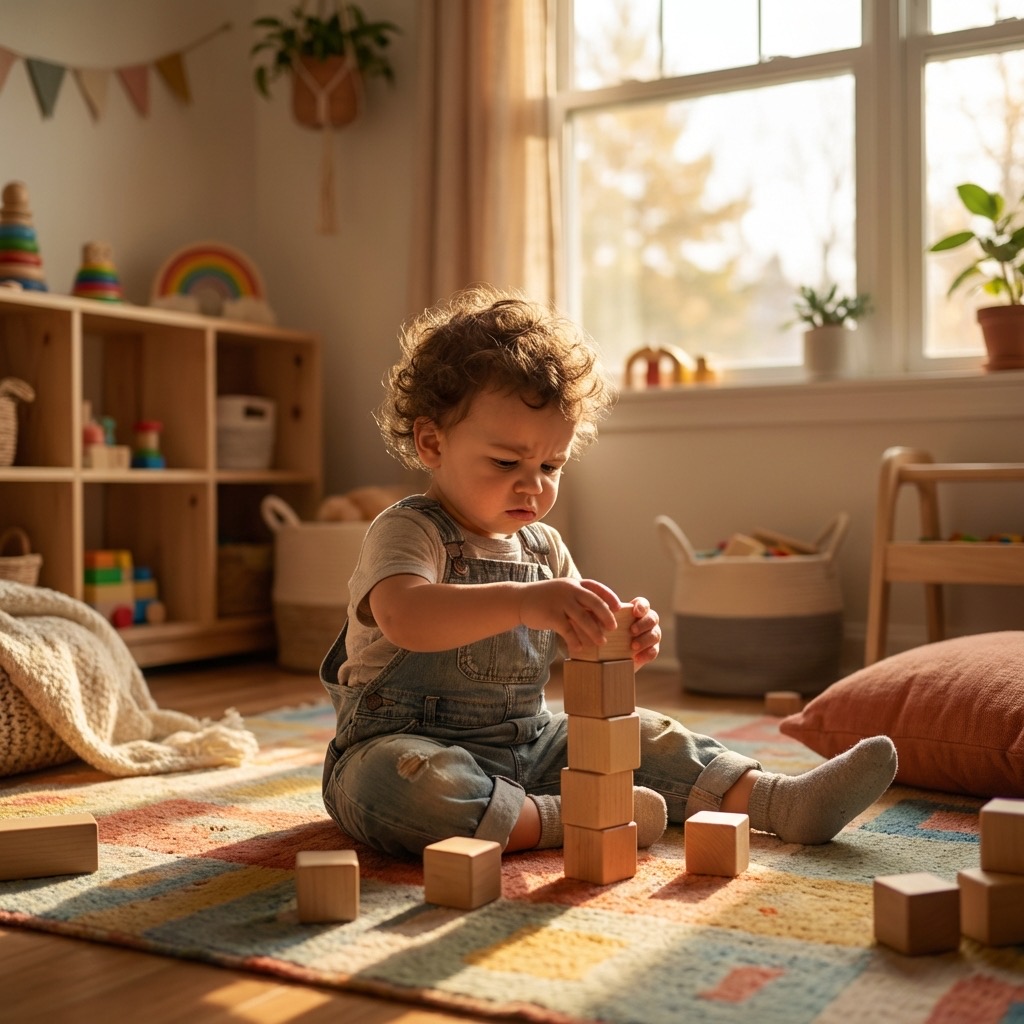
- Stacks blocks (2-3 blocks)
- Puts shapes in sorter (with help)
- Holds crayon and scribbles
- Feeds self with hands (somewhat messy)
Cognitive Development
Learning Accelerates
- Imitates complex actions: Brushing hair, "talking" on phone
- Understands object permanence fully
- Shows problem-solving: Moves obstacle to reach toy
- Matches similar objects
- Responds to name by turning immediately
Social-Emotional Development
Independence Emerges
- Wants to do things independently (may get frustrated)
- Shows emotions clearly: Joy, anger, frustration, affection
- Tests limits constantly
- May have favorite lovey or comfort object
- Enjoys audience (repeats actions that get applause)
Communication
First Words Era
- Says 1-3 words meaningfully
- Understands 10-20 words
- Follows simple commands: "Give me the ball"
- Shakes head "no"
- Imitates animal sounds: Moo, woof, meow
Sleep
- Night: 10-12 hours straight (most babies)
- Naps: 2 naps (2-3 hours total)
- Total: 12-14 hours
Feeding
Texture Variety
- Table foods with soft texture
- Milk: 16-24 oz formula or 3-4 breastfeeds (decreasing as solids increase)
- Self-feeding improves
- Uses sippy cup well
Foods to introduce:
- Soft meats (turkey, chicken)
- Fish (low mercury)
- Whole grain bread
- Pancakes
- Soft fruits (melon, peach)
What You Can Do
Encourage Walking:
- Hold hands for walking practice
- Push toys that baby can walk behind
- Clear walking paths (remove obstacles)
- Go barefoot indoors (better for balance)
- Celebrate attempts (not just successes)
Support Independence:
- Offer choices: Two sippy cups, two outfits
- Allow self-feeding (expect mess)
- Provide age-appropriate toys: Stacking, sorting, shape sorters
- Set consistent limits with gentle redirection
Month 12: Happy First Birthday! 🎂
Physical Development
Major Motor Milestones
- May walk independently (or will soon—range is 9-18 months)
- Stands without support
- Squats and returns to standing
- Climbs onto furniture
- Throws ball (sort of)
- Drinks from cup (with spilling)
Fine Motor Skills
- Feeds self with fingers effectively
- May use spoon (with lots of mess)
- Stacks 2-3 blocks
- Scribbles with crayon
- Turns pages in board books
- Points to things wanted
Cognitive Development
Problem-Solving Skills
- Trial and error: Figures out how toys work
- Imitates complex behaviors: "Cooking," phone conversations
- Finds hidden objects easily
- Groups similar items together
- Shows interest in how things work
Social-Emotional Development
Toddler Traits Emerging
- Strong will developing
- Shows independence: "Me do it!"
- Separation anxiety may persist
- Shows empathy: May cry if another child cries
- Enjoys interactive play with others
Communication
Language Explosion Beginning
- Says 1-5 words (average is 2-3)
- Understands 50+ words
- Responds to simple instructions: "Give it to Daddy"
- Uses gestures: Pointing, waving, nodding
- Imitates words you say
Sleep
- Night: 11-12 hours
- Naps: Moving toward 1 nap (12-18 months transition)
- Total: 12-14 hours
Feeding
Toddler Nutrition
- Whole milk replaces formula at 12 months (16-20 oz daily)
- 3 meals + 2-3 snacks
- Eats most table foods (cut to safe sizes)
- Drinks from sippy or straw cup
- Wean from bottle (recommended)
Sample day of food:
- Breakfast: Oatmeal, berries, milk
- Snack: Yogurt, crackers
- Lunch: Turkey, cheese, avocado, water
- Snack: Banana, milk
- Dinner: Ground beef, sweet potato, peas, milk
What You Can Do
Encourage Development:
- Provide walking opportunities
- Read daily: 20+ minutes
- Sing songs and nursery rhymes
- Play ball: Roll, throw, kick
- Provide art materials: Crayons, finger paint, play-doh
- Explore outdoors: Grass, sand, water play
Language Development:
- Name everything
- Read and point to pictures
- Respond to babbling with real words
- Limit screen time: Still recommended to avoid screens under 18 months (except video chatting)
Red Flags: When to Talk to Your Pediatrician
By 12 months, contact your doctor if your baby:
Physical Concerns:
- Doesn't crawl or move around (by 12 months)
- Can't stand with support
- Doesn't use pincer grasp
- Drags one side of body while crawling
Communication Concerns:
- Doesn't babble
- Doesn't use gestures (wave, point, shake head)
- Doesn't say any words
- Lost language skills previously had
Social/Emotional Concerns:
- Doesn't smile or show happiness
- No eye contact
- Doesn't show interest in games
- Doesn't respond to name
Cognitive Concerns:
- Doesn't point to show things
- Doesn't look where you point
- Lost skills once had
Trust your gut: If something feels off, ask your pediatrician.
12-Month Well-Child Visit
What to Expect:
- Physical exam
- Developmental screening
- Vaccinations (MMR, Varicella, Hepatitis A)
- Lead and anemia screening
- Growth check
- Nutrition counseling
Questions to Ask:
- Transition to whole milk
- Feeding concerns
- Sleep schedule
- Developmental progress
- Safety tips
Growth Expectations (12 Months)
Average:
- Weight: 3x birth weight (20-22 lbs for boys, 18-20 lbs for girls)
- Length: 50% taller than birth (29-30 inches)
- Head circumference: Boys ~47 cm, Girls ~46 cm
Growth slows: Babies gain weight more slowly in year 2.
Safety Reminders
New Hazards:
- Climbing: Anchor all furniture
- Stairs: Use gates, teach safe descending
- Choking: Cut foods to safe sizes
- Windows: Install guards
- Poisons: Lock all cleaners, meds
- Hot surfaces: Stove guards, keep handles turned in
Developmental Activities by Age
7-9 Months:
- Peek-a-boo variations
- Ball rolling
- Stacking soft blocks
- Pat-a-cake
- Crawling races
10-12 Months:
- Shape sorters
- Push-and-pull toys
- Simple puzzles (1-2 pieces)
- Music and dancing
- Water play (supervised)
Transitioning to Toddlerhood
By 12 months, your baby is becoming a toddler. You'll notice:
- More independence
- Strong opinions
- Testing boundaries
- Increased mobility
- Better communication
Remember:
- This is normal development
- Set gentle, consistent limits
- Celebrate milestones
- Every child develops uniquely
- Enjoy this incredible year!
Final Thoughts
The second half of your baby's first year is a whirlwind of development. From sitting to standing, babbling to first words, and from milk-only to table foods—your baby has come so far!
Key Takeaways:
- Milestones are ranges (9-18 months for walking is totally normal)
- Every baby develops at their own pace
- Celebrate progress, not perfection
- When in doubt, ask your pediatrician
- These months fly by—soak up every moment
Next stop: Toddlerhood! Get ready for walking, talking, and personality galore! 🎉
Disclaimer: This article provides general developmental information. Every baby is unique. Consult your pediatrician with specific questions or concerns about your child's development.
Related Articles
Tummy Time: Complete Guide for Parents
Everything you need to know about tummy time: when to start, how long, positions, benefits, and tips to make it enjoyable. Includes troubleshooting for babies who hate tummy time.
Baby Development Activities by Age: Birth to 12 Months
Age-appropriate activities and play ideas to support your baby's development from newborn to 12 months. Includes cognitive, motor, sensory, and social activities for each stage.
Ready to Simplify Baby Tracking?
Join thousands of parents using Kuddle to track feeding, sleep, and growth with AI-powered insights.
Start Free Trial