Baby Milestones 4-6 Months: The Interactive Stage
Dr. Rebecca Thompson
Pediatrician & Child Development Specialist
Baby Milestones: 4-6 Months
Welcome to one of the most exciting developmental periods! Between 4-6 months, your baby transforms from a cuddly newborn into an interactive, curious little person. Let's explore what to expect during this amazing stage.
Month 4: The Social Butterfly Emerges
Physical Development
Motor Skills
- Rolls from tummy to back (and possibly back to tummy)
- Props up on elbows during tummy time
- Holds head steady without support
- Sits with support (can't sit independently yet)
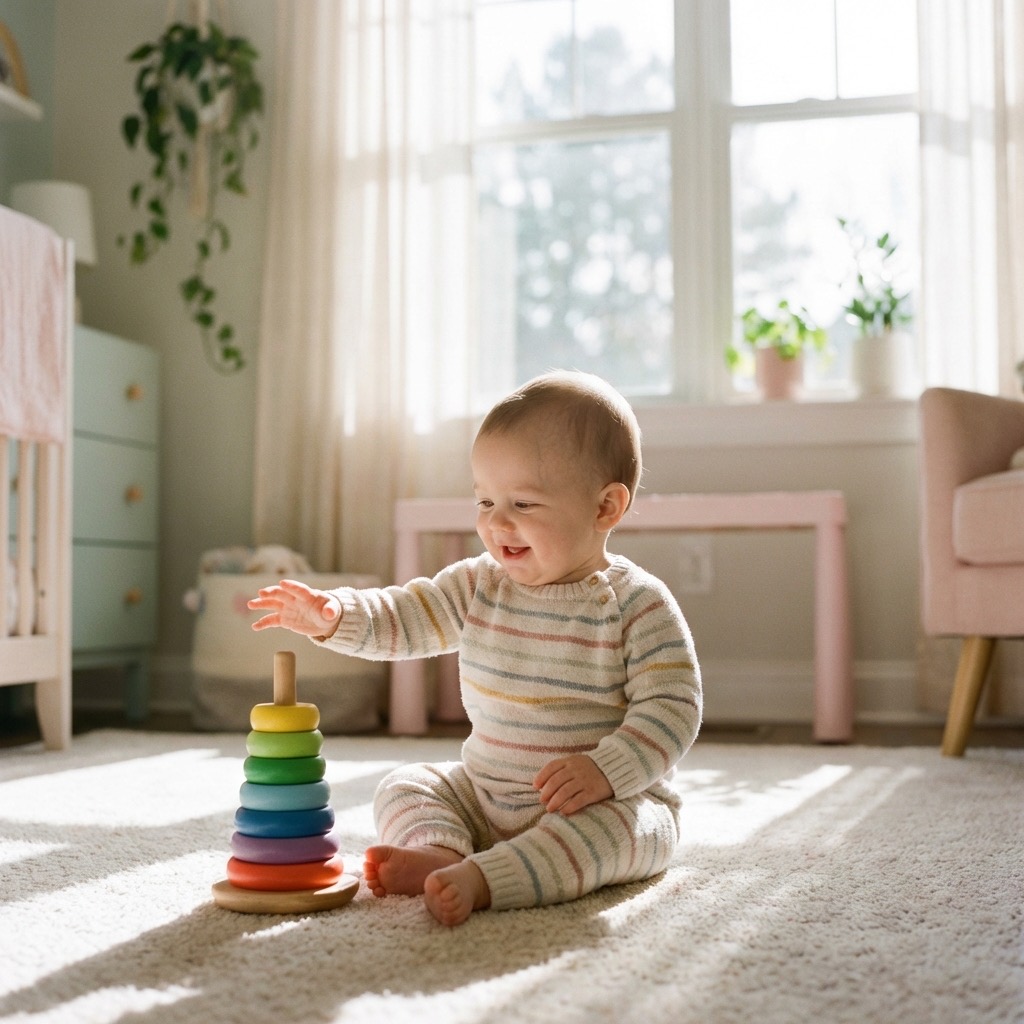
- Reaches and grasps objects with purpose
- Brings objects to mouth to explore
- Bears weight on legs when held standing
Vision
- Color vision fully developed
- Depth perception improving
- Tracks fast-moving objects
- Recognizes familiar faces across room
Cognitive Development
Learning & Exploration
- Cause and effect: Shakes rattle to hear sound
- Object permanence emerging: Looks for dropped toys
- Shows curiosity about surroundings
- Studies objects before reaching
- Responds to name (may start around 4-5 months)
Social-Emotional Development
Personality Shines
- Laughs out loud at games and funny sounds
- Shows excitement when seeing favorite people or toys
- May show stranger awareness (beginning signs)
- Enjoys playing and gets upset when play stops
- Smiles spontaneously
- Copies facial expressions
Communication
Vocalizations Increase
- Babbles with expression: Changes tone and volume
- Consonant sounds: "Ba," "da," "ga," "ma"
- Squeals and raspberries
- Responds to sounds by making sounds
- "Talks" back when you speak
Sleep
- Night sleep: 6-8 hour stretches possible
- Naps: 3-4 naps per day (totaling 3-5 hours)
- Total sleep: 12-15 hours per day
- May experience 4-month sleep regression
Feeding
Breastfed:
- 6-8 feedings per day
- More efficient nursing (10-20 minutes)
Formula-fed:
- 5-6 feedings per day
- 6-8 ounces per feeding
- 28-32 ounces daily
Not ready for solids yet (wait until 6 months per AAP guidelines)
What You Can Do
Encourage Development:
- Tummy time: 30-60 minutes daily (in multiple sessions)
- Provide toys to grasp: Soft blocks, rattles, teethers
- Read daily: Choose board books with simple pictures
- Play on floor together
- Let baby "stand" on your lap while supporting
- Offer different textures to touch and mouth
Social Interaction:
- Talk constantly: Narrate everything you do
- Sing songs with hand motions
- Play peekaboo (baby's favorite game!)
- Mirror baby's sounds and expressions
- Make eye contact during conversations
Month 5: Strengthening & Exploring
Physical Development
Motor Skills Advance
- Rolls both directions (tummy to back AND back to tummy)
- Sits briefly without support (may topple)
- Transfers objects from hand to hand
- Rakes small objects with fingers
- Pushes up on straight arms during tummy time
- May begin "scooting" backward when on belly
Hand Skills
- Palmar grasp strengthens
- Reaches with one hand
- Explores objects by mouthing, shaking, banging
- Drops and picks up toys repeatedly (learning!)
Cognitive Development
Learning Accelerates
- Recognizes own name consistently
- Looks for fallen objects
- Shows interest in mirror reflection
- Imitates actions (clapping, tongue clicking)
- Anticipates events: Gets excited when sees high chair (knows food is coming)
Social-Emotional Development
Preferences Emerge
- Shows clear preferences for toys and people
- May show stranger anxiety (peaks at 6-8 months)
- Seeks attention and interaction
- Shows frustration when can't reach desired object
- Laughs at funny sounds and games
Communication
Babbling Becomes Conversational
- Takes turns "talking" (babbles, pauses, listens)
- Varies pitch and volume expressively
- Blows raspberries
- Yells/squeals to get attention
- Responds to tone of voice (knows when you're happy or upset)
Sleep
- Longer nighttime sleep: Some babies sleep through the night
- Naps consolidate: Moving toward 3 naps per day
- Can self-soothe better (may find thumb or pacifier)
Feeding
Still milk only:
- Breastfed: 6-7 feedings
- Formula: 5-6 feedings, 6-8 oz each
Watch for readiness signs for starting solids (at 6 months):
- Sits with minimal support
- Shows interest in food
- Lost tongue-thrust reflex
- Can move food to back of mouth
What You Can Do
Encourage Development:
- Create safe exploration space: Baby-proofed floor area
- Offer variety of toys: Different textures, sounds, sizes
- Practice sitting: Surround with pillows for support
- Encourage rolling: Place toys just out of reach
- Provide baby-safe mirror for self-discovery
Social Play:
- "So Big" game: "How big is baby? SOOO big!"
- Peekaboo variations
- Gentle bouncing games
- Baby gym or activity mat
Month 6: Half-Birthday Celebration!
Physical Development
Major Motor Milestones
- Sits independently (briefly at first, then longer)
- Rolls easily both directions
- May begin to pivot while on belly (pre-crawling)
- Bounces when held standing
- Supports weight on legs briefly
- Lunges forward to reach toys
Fine Motor Skills
- Transfers objects hand to hand smoothly
- Rakes small items with fingers
- Explores with fingers (pokes, prods, scratches)
- Holds bottle (may not hold well yet)
Cognitive Development
Understanding Grows
- Responds to own name every time
- Understands "no" (tone, not necessarily meaning)
- Looks for hidden objects (object permanence developing)
- Explores cause and effect: Drops spoon to see you pick it up (over and over!)
- Imitates actions: Waves, claps (if taught)
Social-Emotional Development
Attachment Deepens
- Clear attachment to primary caregivers
- Stranger anxiety may begin
- Separation anxiety emerges (knows when you leave)
- Shows affection: Cuddles, smiles at loved ones
- Expresses displeasure clearly (may whine or fuss)
Communication
Pre-Language Skills
- Babbles consonant strings: "Babababa," "mamamama" (not referring to you yet)
- Shouts for attention
- Makes sounds to express emotions: Happy squeals, frustrated grunts
- Responds to emotions in your voice
- Imitates sounds you make
Sleep
- Night sleep: 10-12 hours (some with 1-2 wakings)
- Naps: Usually 2-3 naps (2-3 hours total)
- Total: 12-14 hours per day
Feeding - Starting Solids! 🎉
Milk Remains Primary Nutrition
- Breastfed: Still 5-6 times daily
- Formula: 24-32 oz daily
Introducing Solids (around 6 months)
- Start with single-grain cereal or pureed vegetables/fruits
- One new food every 3-5 days (watch for allergies)
- 1-2 tablespoons once or twice daily to start
- Offer water in sippy cup
Common first foods:
- Iron-fortified infant cereal
- Pureed sweet potato, carrots, peas
- Pureed apple, banana, pear
- Pureed avocado
Foods to avoid until 12 months:
- Honey (botulism risk)
- Cow's milk as main drink
- Choking hazards (whole grapes, nuts, popcorn)
- High-mercury fish
What You Can Do
Encourage Development:
- Practice sitting: Prop with Boppy pillow, surround with toys
- Provide standing support: Hold hands for "walking"
- Offer chunky toys to practice grasp
- Create sensory experiences: Different textures, sounds, tastes
- Read daily: Point to pictures, make sound effects
Starting Solids:
- Make it fun, not stressful
- Let baby touch and explore food
- Expect mess (lots of it!)
- Never force eating
- Watch for allergy signs: Rash, vomiting, diarrhea, difficulty breathing
When to Contact Your Pediatrician
By 6 months, talk to your doctor if your baby:
Physical Concerns:
- Can't hold head steady
- Doesn't reach for objects
- Doesn't roll in either direction
- Seems very stiff or very floppy
- Doesn't bear any weight on legs when supported
Social/Communication Concerns:
- Doesn't smile or show happiness
- Doesn't respond to sounds or voices
- Doesn't babble or make varied sounds
- Doesn't show affection for caregivers
- Doesn't show interest in games or faces
Feeding Concerns:
- Not gaining weight appropriately
- Refuses to eat
- Excessive spitting up or vomiting
General Red Flags:
- Lost skills previously mastered
- One side of body seems weaker than the other
- Eyes don't move together or seem crossed
- Your instinct tells you something is wrong
Growth Expectations
By 6 months, most babies:
- Weight: About 2x their birth weight
- Length: About 6 inches longer than birth
- Head circumference: Increased by 3-4 cm since birth
Average at 6 months:
- Boys: 16-18 lbs, 25-27 inches
- Girls: 14-17 lbs, 24-26 inches
Remember: These are averages. Your baby's growth pattern is what matters most!
Teething
May start around 4-7 months:
- Drooling increases
- Gnawing on everything
- Fussiness
- Mild fever possible (under 101°F)
- Red, swollen gums
Teething relief:
- Cold teething toys
- Gum massage with clean finger
- Cold washcloth to chew
- Infant pain reliever (if recommended by doctor)
Safety Milestones
Time to baby-proof!
- Install safety gates (if not done already)
- Secure furniture to walls (tip-over risk)
- Move cords out of reach
- Cover outlets
- Lock cabinets with cleaning supplies or medications
- Lower crib mattress (once baby can sit)
- Remove crib bumpers and toys (SIDS risk)
The 4-Month Sleep Regression
What it is:
- Baby who slept well suddenly wakes frequently
- Sleep patterns change as brain develops
- Usually lasts 2-6 weeks
How to cope:
- Stick to bedtime routine
- Avoid creating new sleep associations
- Consider gentle sleep training (if desired)
- Be patient—it will pass!
Supporting Your Baby's Development
Daily Activities:
- Floor time: 60-90 minutes when awake
- Reading: 10-15 minutes daily
- Outdoor time: Fresh air and new stimuli
- Music and singing: Throughout the day
- Limit screen time: AAP recommends ZERO screens before 18 months (except video chatting)
Best Toys for 4-6 Months:
- Soft blocks
- Teething toys
- Rattles and shakers
- Crinkly fabric books
- Baby-safe mirrors
- Stacking cups
- Activity gym
Your Baby's Personality
By 6 months, you'll notice your baby has a distinct temperament:
- Activity level: Very active or more laid-back?
- Sociability: Outgoing or cautious with new people?
- Adaptability: Easy-going or prefers routine?
- Mood: Generally happy or more serious?
All temperaments are normal! Understanding your baby's personality helps you parent responsively.
Final Thoughts
Months 4-6 are magical. Your baby is becoming a little person with preferences, a sense of humor, and the ability to interact meaningfully. Enjoy this interactive stage—it goes by so fast!
Remember:
- Celebrate every milestone, no matter how small
- Don't compare your baby to others
- Trust your instincts
- Cherish the cuddles (they won't be babies forever!)
Next up: Mobility! Get ready for sitting, crawling, and baby-proofing everything! 🚼
Disclaimer: This article provides general information about typical development. Every baby is unique. Consult your pediatrician with specific questions or concerns about your baby's development.
Related Articles
Tummy Time: Complete Guide for Parents
Everything you need to know about tummy time: when to start, how long, positions, benefits, and tips to make it enjoyable. Includes troubleshooting for babies who hate tummy time.
Baby Development Activities by Age: Birth to 12 Months
Age-appropriate activities and play ideas to support your baby's development from newborn to 12 months. Includes cognitive, motor, sensory, and social activities for each stage.
Ready to Simplify Baby Tracking?
Join thousands of parents using Kuddle to track feeding, sleep, and growth with AI-powered insights.
Start Free Trial